Home/Services/Junior ADU
Service 05 — Junior ADU (JADU)

The Fastest, Lowest-Cost Path to a Legal Second Unit

A Junior ADU is a compact dwelling unit up to 500 square feet built inside your existing home. Simplified permitting, lower fees, and in most California cities it does not count against your lot's unit cap.

150–500Square Feet
2–4Months Build
30–45Days Permit
$65k–$145kConstruction Cost
150 – 500 sq ft Typical Range
Inside Main Home Not a New Structure
Efficiency Kitchen Required
$65k – $145k Construction Cost
$1,400 – $2,400 Monthly Rent Range

A Compact, Fully Legal Dwelling Unit Inside Your Home

A Junior ADU (JADU) is a small, self-contained dwelling unit built within the existing walls of your primary residence. Under California law, a JADU must be no more than 500 square feet, must have its own exterior entrance (or an entrance from a common area), and must include a small efficiency kitchen and a full bathroom.

Because a JADU does not add a new structure to your lot, the permitting path is significantly simpler than any other ADU type. Most jurisdictions approve JADUs on an over-the-counter or expedited basis, and California law generally prohibits cities from applying the same impact fees and parking requirements they apply to detached units.

A JADU cannot be sold separately from the main home, but it can be rented long-term and can be occupied by family. For homeowners who want a legal, income-producing unit with the least cost and complexity, a JADU is often the ideal solution.

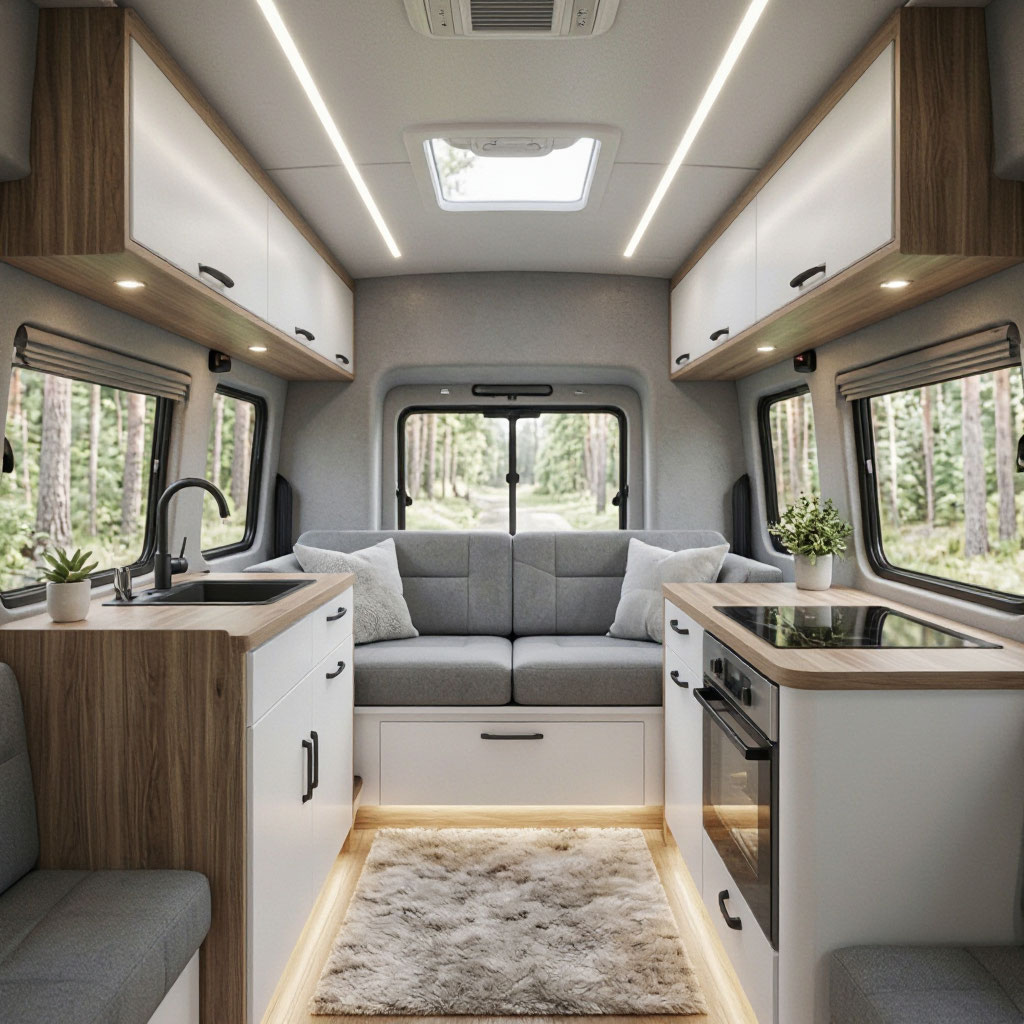
Junior ADU interior conversion

The Lowest-Cost, Fastest-Approval ADU Type

No other ADU type comes close to the JADU for speed and simplicity. It is not right for every home — but when a house has the right unused interior space, it is often the single best value in ADU construction.

  • Lowest cost. $65k–$145k versus $120k+ for a garage conversion or $245k+ for a detached unit — often a fraction of the price.
  • Fastest permits. 30–45 days in most jurisdictions, sometimes same-week over-the-counter approval.
  • Reduced impact fees. California law limits how much cities can charge for JADU permits and exempts JADUs from most impact fees entirely.
  • No lot-coverage impact. A JADU occupies existing interior space, so it does not count against your lot's floor-area ratio or coverage limits.
  • Unit cap exemption. In most jurisdictions, a JADU does not count against the maximum number of dwelling units permitted on your lot.
  • No parking requirement. California law exempts JADUs from any additional parking requirements.
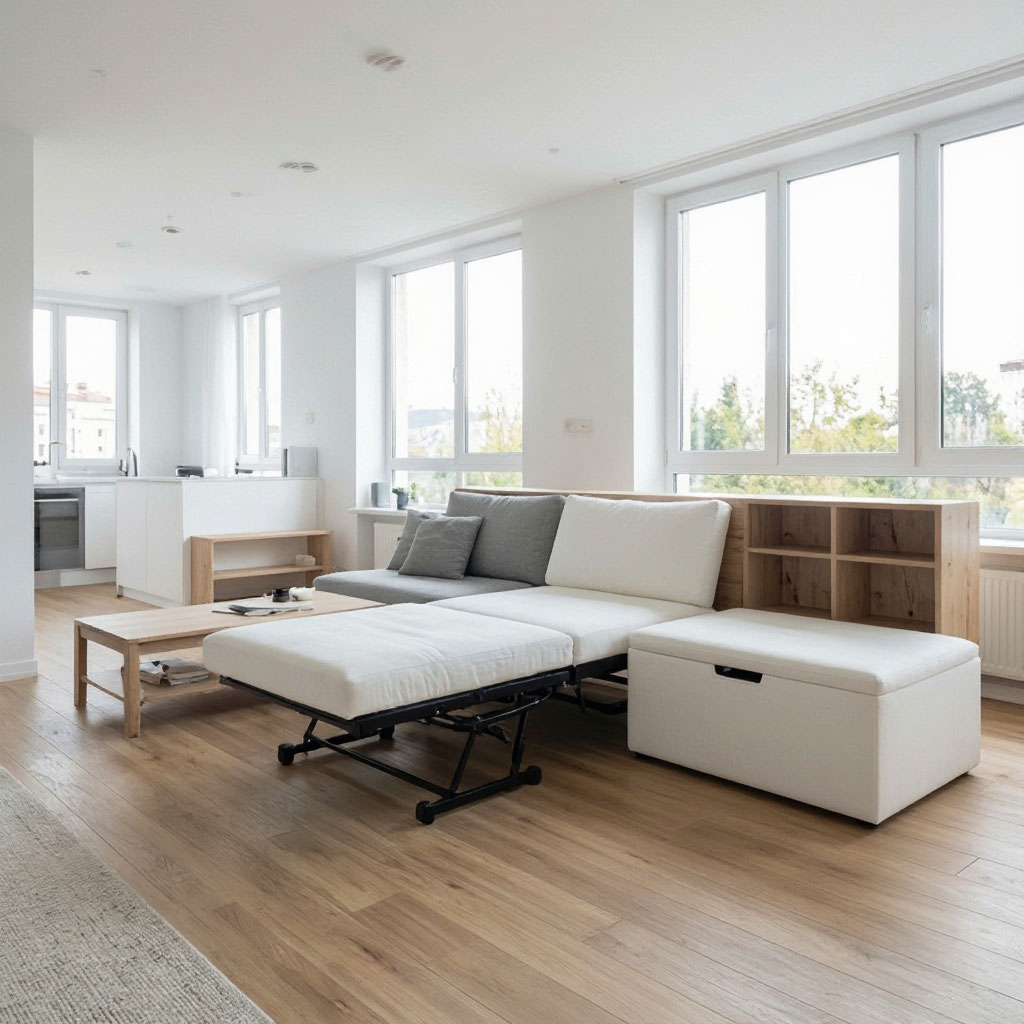
Junior ADU living area

What Makes a Unit a Legal JADU

California law is specific about what qualifies as a JADU. These are the six rules we verify on every feasibility check.

01

Maximum 500 Square Feet

The unit cannot exceed 500 sq ft of interior floor area. There is no legal minimum, though 150 sq ft is the practical floor for a comfortable layout.

02

Within the Existing Home

The JADU must be contained entirely within the walls of the primary residence. No new structure or addition is permitted.

03

Efficiency Kitchen Required

Must include a small kitchen — sink, counter, refrigerator space, and either a cooktop or microwave. A full residential kitchen is not required.

04

Separate Entrance

The unit must have its own exterior entrance, or an entrance from a common area. It cannot require passing through the main home's living space.

05

Full Bathroom

A complete bathroom with toilet, sink, and shower or tub. Efficiencies with only a half bath do not qualify as JADUs.

06

Owner Occupancy

One of the two units on the property — either the main home or the JADU — must be owner-occupied. This is a statewide JADU requirement.

Spaces That Convert Well

The best JADU is built inside space you already have but are not fully using. These are the four most common and successful configurations.

Oversized Bedroom Suite

A large secondary bedroom with an adjacent bathroom converts into a self-contained JADU with minimal structural work. Add a small kitchen against an existing plumbing wall.

Best when: room is 200+ sq ft with an adjacent full bath

Finished Basement

A finished or partially finished basement can become a fully legal JADU with proper ceiling height, egress, and a new exterior stair. Often the largest interior space available.

Best when: ceiling height is 7'6" or higher and dry

Guest Wing or Bonus Room

A ground-floor den, guest wing, or oversized bonus room along an exterior wall converts easily, especially if it already has a bathroom nearby and a door to the yard.

Best when: room touches an exterior wall for a new entry door

Attached Garage Rear Bay

A rear portion of an attached garage can become a JADU while preserving the front bays for parking. The JADU occupies interior space within the existing home envelope.

Best when: attached garage is 20+ feet deep and has an exterior side or rear wall

Junior ADU Cost by Size

Real 2026 California conversion costs from recent ADU Construction projects. Permit and utility fees are separate and paid at jurisdiction rates — JADU fees are usually a fraction of full ADU fees.

Size Configuration Construction Cost Timeline Typical Use
150 sq ft Studio, kitchenette, 1 bath $65,000 – $80,000 2 – 3 months Studio rental, caregiver suite
250 sq ft Studio with sleeping alcove $80,000 – $95,000 2 – 3 months Long-term rental
350 sq ft Studio, full kitchenette $95,000 – $115,000 3 – 4 months Rental, family suite
450 sq ft 1 BR, 1 bath $115,000 – $135,000 3 – 4 months Rental, guest suite
500 sq ft 1 BR, 1 bath, den $125,000 – $145,000 3 – 4 months Premium rental, multigenerational

How to Decide Between the Two

Both are legal dwellings. Each has real strengths and real limitations. The right choice depends on your home, your budget, and your goals.

JADU Wins When

  • Budget is tight. Typically 40–60% cheaper than a garage conversion and up to 70% cheaper than a detached ADU.
  • Speed matters. Permits in 30–45 days vs. 60–150 days for other ADU types.
  • You already have the space. An unused bedroom, basement, or bonus room converts with minimal structural work.
  • You want to avoid unit caps. In most cities, a JADU does not count against the maximum number of units on your lot.
  • Owner occupancy is fine. You plan to live on the property — a statewide JADU requirement.

Standard ADU Wins When

  • You need more space. JADUs are capped at 500 sq ft. Standard ADUs can be 1,200+ sq ft.
  • Privacy is important. A JADU shares walls, floors, and sometimes plumbing with the main home.
  • You want higher rent. JADUs rent for less per month because they are smaller and attached.
  • You do not want to live on site. Standard ADUs have no owner-occupancy requirement.
  • You have exterior space. A backyard or side lot that supports a detached or attached structure adds lasting value.

What It Looks Like When It Works

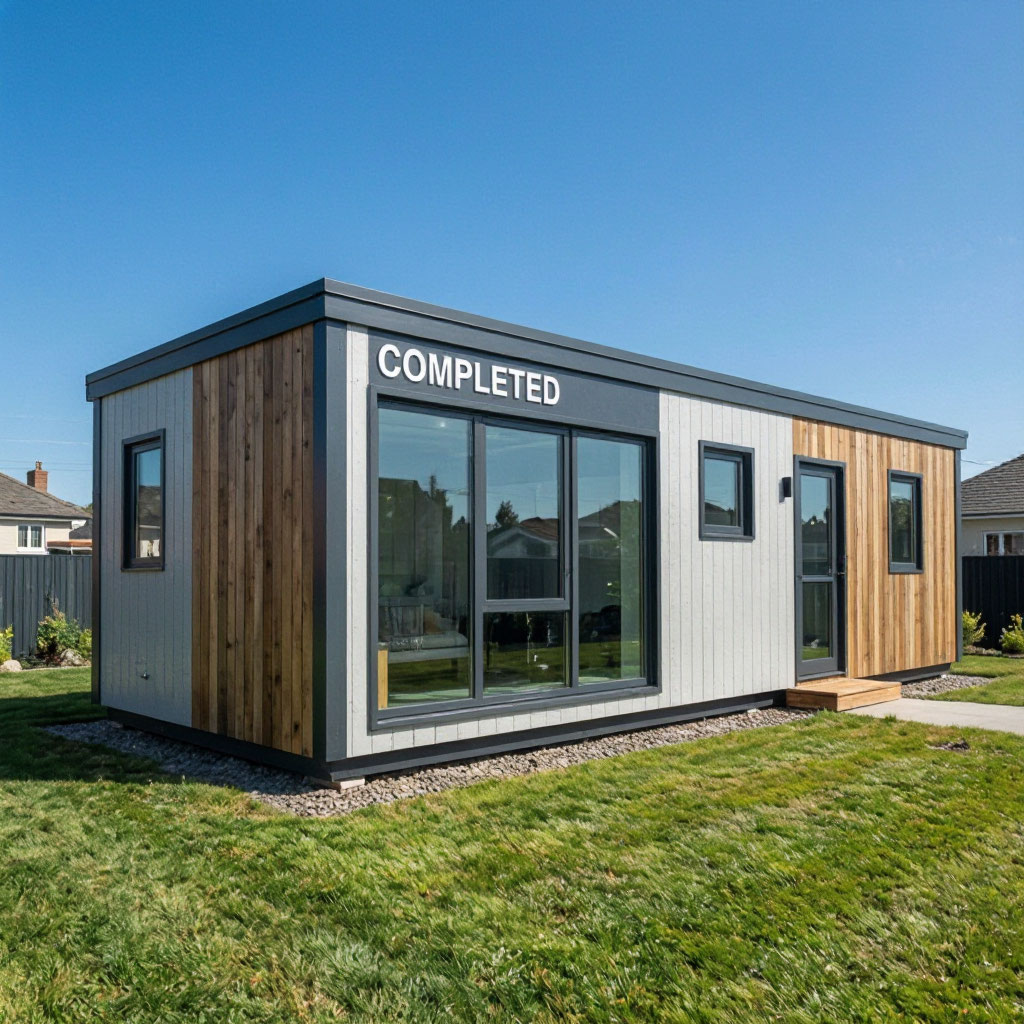
Completed junior ADU

"We had a finished basement we barely used. ADU Construction carved out a 440 sq ft junior ADU in about three months — a small kitchenette, full bath, and a new exterior stair down to the side yard. The permit came through in five weeks. We rent it now for $1,900 a month, which is more than enough to cover the construction cost over time. And because we live in the main house, the owner-occupancy rule is satisfied."

Rachel M. Junior ADU — Glendale, CA

Junior ADU FAQ

What is the difference between a JADU and a standard ADU?

The two main differences are size and location. A JADU is capped at 500 square feet and must be built entirely within the existing walls of your primary residence — no new structure, no addition. A standard ADU can be much larger (up to 1,200+ sq ft in most jurisdictions) and can be detached, attached, or an above-garage unit. JADUs also have different permitting rules, lower fees, an owner-occupancy requirement, and in most cities they do not count against your lot's unit cap.

Does a JADU require its own separate entrance?

Yes. California law requires a JADU to have its own separate exterior entrance, or an entrance from a common area. It cannot require passing through the primary residence's living space to access. This is what separates a JADU from a simple in-law suite or a converted bedroom. A common solution is a new exterior door off the side yard or an existing secondary entrance that gets upgraded to a proper entry door with hardware and lighting.

What is an "efficiency kitchen" and is a full kitchen allowed in a JADU?

California law requires a JADU to include an efficiency kitchen, defined as a cooking facility with a sink, counter, and space for a refrigerator. It does not require a full range — a cooktop or microwave-cooktop combination is sufficient. Some jurisdictions allow a full residential kitchen in a JADU, but many do not, because the intent is that the JADU remains a small secondary unit rather than a fully independent rental with all appliances. We confirm your jurisdiction's specific rules during feasibility.

Does the owner have to live in the main house if there is a JADU?

Yes. California law requires that either the primary residence or the JADU be owner-occupied when a JADU exists on the property. The owner can live in the main house and rent the JADU, or live in the JADU and rent the main house — but they must occupy one of the two units. This is a statewide requirement and it is enforced by the jurisdiction that issued the JADU permit. We confirm and document compliance during permitting.

Can I convert part of my garage into a JADU and keep the rest for parking?

Yes, and this is a common configuration. If your attached garage is at least 20 feet deep, we can often carve out the rear portion as a JADU while preserving the front bays for parking. The JADU must be fully within the walls of the existing home envelope, must have its own exterior entry, and must meet all JADU legal requirements — but the fact that it sits within the garage footprint does not disqualify it. We have built several successful JADUs using this configuration.

How much rent can a JADU generate compared to a larger ADU?

JADUs typically rent for 20–35% less than a comparable detached ADU because they are smaller and attached to the main home. In early 2026, well-built JADUs rent for roughly: $1,700–$2,400/month in the Bay Area, $1,400–$2,000 in the Los Angeles metro, $1,300–$1,800 in San Diego, and $1,000–$1,400 in Sacramento and the Central Valley. Even at the lower end, the rental income is often enough to cover the entire construction cost within 8–12 years.

Does a JADU need its own utility meters?

No. Because a JADU shares the walls and structure of the main home, it is typically allowed to share utility service with the primary residence. This is one of the reasons JADUs are so affordable — you avoid the significant cost of separate electrical, gas, water, and sewer connections. For long-term rentals, some owners install a separate electrical subpanel for the JADU so utility costs can be split fairly with the tenant. We can design either configuration.
Not Sure a JADU Is Right for You?

Compare the other options we build. Every project starts with a free feasibility assessment — we will recommend the right fit for your property, not the most expensive one.

Find Out If Your Home Can Support a JADU

Send us the address and a description of the interior space you are considering — a basement, bedroom, bonus room, or garage bay. We will tell you in writing whether it qualifies for a legal JADU and what the realistic cost range is.

(415) 867-5309
450 Mission Street, San Francisco, CA 94105
Mon–Fri: 8:00 AM – 6:00 PM PT

By submitting, you agree to our Privacy Policy. We respond within one business day.